- Abducted by Christian extremist group as a teen, Ugandan man now turns to faith to heal his trauma

[Religion News Service] He was 17 years old when armed men from the Lord’s Resistance Army, a Christian extremist group based in Central and East Africa, abducted him from his northern Ugandan home, killed his mother and father and took his sister, whom he has not seen since. The wave of violence that engulfed his family eventually led to violence he perpetrated on others. “We could be sent to attack villages and slaughter people,” said the man, now 40, who asked not to be identified because he fears retaliation from the community to which he recently returned. But, he added: “We are also victims.” Earlier this month, he joined more than 2,000 former LRA captives, combatants and family members in Lira City in northern Uganda for a prayer service of healing, forgiveness and reconciliation. Organized by the Anglican Diocese of Lango in partnership with LRA returnees, the gathering brought together people carrying one of the conflict’s most complicated legacies: Many were abducted, some as children, and forced to fight and kill. Some were forced to marry warlords. Years after returning home, some struggle not only with what was done to them, but also with what they were forced to do, and with communities that sometimes regard them as perpetrators rather than victims. Read the full article here.
- Episcopalians honor Indigenous boarding school victims, survivors on Orange Shirt Day

[Episcopal News Service] Sept. 30 is the National Day for Truth and Reconciliation, an annual observance to bring awareness to Indigenous boarding schools and to honor victims, survivors and their families. Episcopal dioceses and institutions are observing the day with educational events, including lectures, panel discussions with survivors and documentary screenings. The day of remembrance isn’t an official churchwide observance, but The Episcopal Church’s Truth, Justice & Healing Commission on Native Boarding Schools is working on a resolution to make it so. Some dioceses, including Maine and Northern Michigan, have been observing the National Day for Truth and Reconciliation for several years. Several members of the Truth, Justice & Healing Commission on Native Boarding Schools will participate in events. Episcopal Divinity School, the Coalition to Dismantle the Doctrine of Discovery and the Diocese of Arizona will co-host a livestreamed presentation and panel discussion on Sept. 30 at 7:30 p.m. Eastern via Zoom. Pearl Chanar, an Athabaskan tribal member and a boarding school survivor from Alaska who serves as the commission’s co-chair, will be one of the panelists. Like many Native Alaskans, Chanar was sent out of state, hundreds of miles away from home, to attend a boarding school. “For me as a boarding school survivor and being on this commission, I’m driven by the fact that something has to be done for these children,” Chanar told Episcopal News Service. Joining Chanar in the panel discussion are Vance Blackfox, a Cherokee theologian who serves as the Indigenous Theological Circle’s ecumenical and tribal relations director and is a member of the boarding schools commission, and the Rev. Allen Buck, a Cherokee elder who serves as director of the United Methodist Church’s Circle of Indigenous Ministries in the Northwest. They will discuss how churches and communities are working towards truth-telling and repair, and how Christians can participate. The Rev. Debbie Royals, former canon for the Diocese of Arizona’s Native American Ministry and a member of the Pascua Yaqui Tribe, will give a presentation before the panel discussion. Click here to register for the presentation and panel discussion. In Old Town, Maine, Episcopalians will participate in the Penobscot Nation’s public Every Child Matters Orange Shirt Day Walk the evening of Sept. 30. A public Remembrance Walk in Sonora, California, will begin in front of St. James’ Episcopal Church the evening of Sept. 30. The walk will end with singing and drumming. During the afternoon and evening of Sept. 30 throughout the Diocese of Arizona, Episcopalians will attend a screening of a documentary on the yearlong Listening & Healing pilgrimage the diocese’s Council for Native American Ministry hosted in 2024. During the pilgrimage, which was split into multiple events, pilgrims listened to survivors, families, researchers and Indigenous leaders share their stories. The pilgrimage ended with a healing ceremony led by Royals. Arizona had the second-highest number of Indigenous boarding schools in the country, behind Oklahoma. None of the identified 47 schools were Episcopal-operated, but the Diocese of Arizona is still conducting its own archival investigation to make sure none were overlooked. The National Day for Truth and Reconciliation began in 2013 in Williams Lake, British Columbia, Canada, as Orange Shirt Day with the tagline “Every Child Matters.” The inspiration came from Phyllis Jack Webstad, a Secwépemc survivor who shared her story of attending the St. Joseph’s Indian Residential School in 1973, when she was 6 years old. On the first day of school, Webstad was stripped of her clothes, including the new orange shirt her grandmother bought for her. The school never gave it back to her. “The color orange has always reminded me of that and how my feelings didn’t matter, how no one cared and how I felt like I was worth nothing,” Webstad said in her story on the Orange Shirt Society’s website. “All of us little children were crying, and no one cared.” The U.S. Indigenous boarding school system was intended to assimilate the children into white society at the expense of their Native American identities, languages and cultures. Indigenous students endured a wide spectrum of experiences at the boarding schools, dating as far back as 1819. Some were forced to attend the schools, run by the federal government and Christian denominations, while other families voluntarily sent their children to receive what often was the only education available. In some cases, they faced a nightmare of mistreatment, abuse and even death far from home. Other boarding school survivors recall no physical abuse but still experienced trauma from the family separation and deprivation of their culture and identity. The Episcopal Church has so far confirmed its involvement in at least 34 of the more than 500 known boarding schools in the United States. Over the last two years, the Truth, Justice & Healing Commission on Native Boarding Schools, has identified 25 additional schools by researching diocesan records, Miskopwaaganikwa Leora Tadgerson, commission co-chair and a member of the Bay Mills Indian Community, told ENS. The commission formed in 2025 from two working groups that were established in 2022 by General Convention and Executive Council. Tadgerson, who also serves as the Diocese of Northern Michigan’s director of reparations and justice, anticipates that researching the full extent of The Episcopal Church’s complicity and gathering testaments from survivors will take several more years. “There are still so many dioceses that we have to work with, and so many tribes. This work is just the beginning,” Tadgerson told ENS. Observing the National Day for Truth and Reconciliation is a “good starting point” for non-Indigenous people to learn about the boarding schools’ lasting effects, Tadgerson said. “Beyond larger events like Orange Shirt Day, we definitely encourage folks to get involved with the local tribal initiatives,” she said. “Take the time to learn how the Indian boarding school experience was localized. That’s also a good starting point.” –Shireen Korkzan is a reporter and assistant editor for Episcopal News Service. She can be reached at skorkzan@episcopalchurch.org.
- Province VIII Episcopalians address shared climate issues, solutions at creation care conference

[Episcopal News Service — Salt Lake City, Utah] Even though the 18 dioceses in The Episcopal Church’s Province VIII are geographically spread across more than 7,000 miles, from Navajoland to Alaska, Hawai‘i and Taiwan, they share similar climate-related challenges, including water scarcity and wildfires. Episcopalians who live in the westernmost province have come together to address these issues as a province. To start, dozens of them gathered Sept. 25-27 here at the Episcopal Retreat & Conference Center to learn about the causes and effects of climate change in desert regions, and how to mitigate and prevent them. Some 75 participants from 14 dioceses, including ecumenical partners from the Evangelical Lutheran Church in America and the United Church of Christ, attended the Creation Care Network Conference. Presentations were organized by element: water, air, fire and land. Topics ranged from saving the Great Salt Lake from drought and overuse to preventing desertification by practicing sustainable farming and grazing practices. The conference aimed not only to educate and inspire, but to encourage collaboration in everyday climate action. “Inspiration without practice gets absorbed with our already full lives,” the Rev. Lisa Graumlich, a climatologist and a deacon serving at St. Andrew’s Episcopal Church in Tucson, Arizona, said in her keynote speech at the conference. “The covenant community is how we find courage to truly see what is happening, to seize this moment as transformative rather than merely catastrophic. … We were never meant to do this alone.” Using the Great Salt Lake and Colorado River as case studies, the water-related presentations centered on conservation and the potential consequences of inaction, including possible permanent desiccation. The Great Salt Lake, for example, is a key ecosystem in the Western Hemisphere as the largest saline lake in North America and a habitat for 10 million migratory birds and other animals. Due to water overuse, including diverting water from the Great Salt Lake to grow water-intensive crops like alfalfa and hay, the lake has lost 73% of its water and 60% of its surface area since 1850, and since 2020, it is losing around 2 million acre-feet of water through evaporation annually, according to research conducted by Brigham Young University in Provo. Amy Quirk, a climate change consultant and parishioner of Grace Cathedral in San Francisco, California, shared how the nonprofit San Francisco Baykeeper uses a three-part model – investigation, advocacy and litigation – to protect and preserve the San Francisco Bay. That combination “has yielded more than 300 legal and policy victories, holding polluters and government agencies accountable for the health of our community’s wildland communities,” Quirk said during her presentation. “Perhaps it will be useful to consider in your own creation care work in other parts of The Episcopal Church’s Province VIII.” During the air-related presentation, Daniel Moyer and Bob Wohlsen shared how churches throughout the Diocese of Northern California have drastically improved their energy efficiency and reduced fossil fuel dependency. The diocese is on track to achieve The Episcopal Church’s churchwide 2030 carbon neutrality goal, which was established in 2022 by General Convention Resolution A087. St. Alban’s Episcopal Church in Arcata, for example, achieved a zero-carbon footprint in 2025 through comprehensive solar, water and electric upgrades. The parish’s initiative began in 2018 after it established a creation care “green team.” “I hope that listeners took away from my presentation that there’s not a barrier that can’t be overcome to starting a ‘green team’ and being successful at it,” Moyer, a member of St. Alban’s team, told Episcopal News Service. “There are a lot of grant and funding opportunities and resources to figure out how to do these projects. At the end of the day, there is not too small a project that can make a difference. It could be as simple as making sure we turn off lights when we leave a room or use cloth napkins and non-plastic cutlery during church coffee hour.” Ed Stafford is a marketing professor at the Jon M. Huntsman School of Business at Utah State University in Logan who specializes in sustainable entrepreneurship and marketing renewable energy and clean technology. In his presentation, he shared how scientists are addressing preparations for Salt Lake City to host the 2034 Winter Olympics and Paralympics. Rising global temperatures threaten the long-term viability of the Winter Olympics and Paralympics, reducing the number of reliable host cities and building a dependency on creating artificial snow. A January World Economic Forum analysis estimates that 10 countries will be able to host the Winter Olympics and Paralympics by 2040 as snowfall declines worldwide. “I’ve always felt that there’s this moral obligation that in order to be a good Christian we need to protect God’s planet,” Stafford, a parishioner at St. John’s Episcopal Church in Logan, told ENS. “We’re trying to get more people thinking about air pollution and how to respond to it. … BYU canceled a football game a few years ago because of wildfire air pollution. We might not even have snow by the Olympics. Thinking about all these things, my belief is that we need to be proactive now and try to mitigate climate issues before they happen. We’ve only got eight years to prepare.” Speakers from the fire-related panel shared lessons, including preparation and climate resilience planning, from the deadly wildfires that devastated communities across the Diocese of Los Angeles in 2025, destroying one Episcopal church, two rectories and several school buildings. The land-related panelists shared how improper farming and grazing practices cause desertification and how to transition to sustainable practices. They also shared how native plants and grasses can improve soil and save water. Since General Convention passed a resolution in 2024 calling on Episcopal institutions to “build networks around creation care and renewable energy,” 12 have been established across 55 dioceses in the United States, Latin America and Taiwan, and they’re now addressing region-specific environmental concerns and possible solutions. These eco-region networks seek to “link people, projects and properties dedicated to nature-based solutions to slow
- Former Long Island church to be sold for $11.8 million as two congregations merge

[Episcopal News Service] Two Episcopal congregations in the Diocese of Long Island began worshipping together this month through a merger that expects to benefit financially from the prospective sale of one of the two church properties for $11.8 million. St. Stephen’s Episcopal Church, a historically Black congregation that was founded in 1902 in New York’s Queens borough, had spent decades discussing what to do about its aging church in the Jamaica neighborhood. “In recent years, the challenges of maintaining the property and sustaining the parish financially have become increasingly difficult,” the Rev. Frederick Walker, the congregation’s priest-in-charge, said last month in a diocesan article. In March 2026, St. Stephen’s vestry voted to merge with St. Gabriel’s Episcopal Church in the nearby Hollis neighborhood, allowing both congregations to invest their resources in parish life and ministry together. The final service at St. Stephen’s occurred Sept. 6, and the congregations’ first joint worship was held at St. Gabriel’s on Sept. 13. “What excites me is what becomes possible when we no longer have to devote so much energy and so many resources to maintaining aging buildings,” Walker said. “St. Stephen’s and St. Gabriel’s each have gifted, committed people, and together I believe they can build a vibrant ministry, strengthen their relationships in the community and flourish as one parish for years to come.” The diocese has put the former St. Stephen’s property up for sale for $11,750,000. The corner .38-acre lot is located next to a public library branch and is zoned for commercial developments and multifamily housing. The merged congregation intends to preserve spiritually and historically distinctive elements of the former St. Stephen’s, such as stained-glass windows and other furnishings, though the structure could be demolished in a redevelopment. Proceeds from the sale would become “part of the resources of the merged parish,” according to the diocese. “This is truly a merger, not simply the closing of one congregation,” Bishop Lawrence Provenzano said in a diocesan article, published before his successor, Bishop Adam Shoemaker, was consecrated as the new bishop of Long Island. “The people of St. Stephen’s carry with them more than a century of faith, relationships and witness in Jamaica,” Provenzano said. “As they say farewell to a place that generations have called home, we give thanks for all that has been built there and look with hope toward what St. Stephen’s and St. Gabriel’s will build together.” – David Paulsen is a senior reporter and editor for Episcopal News Service based in Wisconsin. He can be reached at dpaulsen@episcopalchurch.org.
- Archbishop of Canterbury addresses House of Bishops during US visit

[Episcopal News Service – Navasota, Texas] Archbishop of Canterbury Sarah Mullally visited the House of Bishops Sept. 25 here at Camp Allen during its fall meeting. Texas was the first stop on her Sept. 22-28 visit to the United States, her first as archbishop of Canterbury. Anglican provinces, including The Episcopal Church, “face very similar challenges and very similar joys” even though they’re geographically, culturally and linguistically different, Mullally told the bishops. As archbishop of Canterbury, “I have had the joy of being in Jerusalem and Europe. I’ve had the joy of being in Ghana, Cameroon and Kenya and Burundi, and in all of those places, when you go to church, you see an Anglican church,” she said. “Despite the different cultures, different languages, different social settings, different environments, the churches are recognizable as part of the Anglican Communion. I have been absolutely overwhelmed by the welcome that I have received in all those places, and it has been a reminder to me that we’re family.” The House of Bishops was equally excited for Mullally to be part of its Sept. 23-28 gathering, Presiding Bishop Sean Rowe told Episcopal News Service. “It’s amazing to have the archbishop of Canterbury with us. She’s shown her genuine leadership and care for the [Anglican] Communion and love for this church,” Rowe said. “It’s exciting to have her represent the unity of the church.” Mullally noted she was addressing the House of Bishops exactly six months after her March 25 installation as the first woman archbishop of Canterbury in the office’s 1,400-year history. As archbishop of Canterbury, Mullally is the most senior bishop in the Church of England and serves as the spiritual leader of the worldwide Anglican Communion, which includes 42 member provinces. “Bishop Sarah has long been known in the Church of England as a wise and steady leader, committed to supporting those who are vulnerable and leading God’s people through difficult times,” Rowe told the bishops as he introduced Mullally. “In these last six months, the rest of us across the Anglican Communion have come to see these qualities for ourselves and give thanks for the gift of serving alongside her.” Before Mullally arrived, several bishops submitted questions for Rowe to ask her during a Q&A discussion. Question topics ranged from evolving as an increasingly postcolonial and polycentric – having more than one center of control – church, to her experience meeting with Pope Leo XIV in April in Vatican City, to supporting Anglicans in the Episcopal Church in Jerusalem and the Middle East. Mullally described the bishops’ questions as showing that “we have lots of common ground.” “Having those conversations where there may be differences is so important because we not only gain understanding of other people, we gain understanding of ourselves,” Mullally told ENS Sept. 25 at Camp Allen. “They were great questions, and maybe the one that I will hold on to is, ‘What brings me joy?’ because I think that is so important for us to find joy in our lives, and, for me, it’s joyful to be here today with The Episcopal Church. It’s joyful to go out in parishes in the Church of England, and also across the Anglican Communion and see the way that God is working.” Indianapolis Bishop Jennifer Baskerville-Burrows, who co-represented The Episcopal Church at Mullally’s installation as vice-chair of the House of Bishops, described Mullally’s brief visit as a “real blessing.” “Our part of the [Anglican] Communion is eager to know her and to walk alongside her and continue to pray for her,” Baskerville-Burrows told ENS. “To have even just a few minutes was a real blessing.” Colorado Bishop Kym Lucas, who participated in a small Bible study group with Mullally during the 2022 Lambeth Conference, echoed the sentiment. She described Mullally’s visit as a “testament” to increasing connection in the Anglican Communion. “I think it is a testament to our connection and the desire for increased connection across the Anglican Communion, and I’m excited about it,” said Lucas, who serves as the House of Bishops’ secretary. “It’s something that I’m working on as well from my diocesan perspective – how can we build community across distance? I think [Mullally] being here was just a really helpful step in that. Everyone seemed receptive. I’m excited about her leadership, and I know her as a very faithful person.” After departing Camp Allen in the early evening, Mullally left for Greenwich, Connecticut, where she preached and joined a Q&A forum at Christ Church the morning of Sept. 27. Later that evening, she led the Evensong and benediction at St. Thomas Church on Fifth Avenue in New York, New York. On Sept. 28, Mullally went to the United Nations to meet with U.N. leaders. She was also scheduled to participate in a private roundtable discussion at The Episcopal Church’s headquarters in New York with the International Committee of the Red Cross on protecting health care in conflict. “At this time, going into the meeting in the U.N., I’m conscious that right across the world, Anglican churches are involved in health care, often in places of conflict,” Mullally, a former cancer nurse, told ENS. “For me, the question is: ‘What could we be doing in partnership with the other organizations to ensure that health care continues despite conflict in the world?’ We are Christ’s hands and feet in the world, and that is true in places of conflict as well as in places of peace.” While reflecting on these questions and those asked during the meeting, Mullally described Anglican and Episcopal bishops communion-wide as “figures of unity,” key to building understanding and friendship in a socially and politically “polarized world.” Bishops are called to be figures of unity and people of peace, and how they enable churches and create unifying spaces is critical, Mullally told ENS. “[Having] wonderful links across the Anglican Communion builds understanding and friendship, which really helps in a polarized world.” –Shireen
- Who We Are
-
-
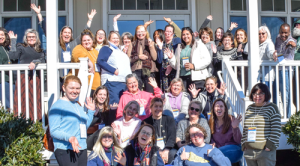
Province III is the Episcopal arm of the Jesus movement in the Mid-Atlantic. We seek to connect communities, provide a forum for the sharing of resources, and empower the people of the 1,287 churches and the twelve dioceses in our region.
-
-
- What We Do
-
-
These are several of the areas in which we unite in faith, love, and community to be stronger and do ministry better together.

-
-
-
- News