- RIP: Former Southeast Florida Bishop Calvin Schofield Jr. dies at 93

[Episcopal News Service] The Rt. Rev. Calvin “Cal” Onderdonk Schofield Jr., who served the Diocese of Southeast Florida as bishop for 20 years, died on Oct. 5 in Denver, Colorado. He was 93. Schofield Jr. “was known for his remarkable sense of humor and his strong, warm pastoral leadership,” St. Gregory’s Episcopal Church in Boca Raton, Florida, posted on its website. Schofield Jr. was born Jan. 6, 1933, in Delhi, New York. He was a member of the Onderdonk family, which produced two Episcopal bishops in the 19th century: the Rt. Rev. Henry Ustick Onderdonk, the second bishop of the Diocese of Pennsylvania, and the Rt. Rev. Benjamin Treadwell Onderdonk, the fourth bishop of the Diocese of New York. Schofield Jr. earned a Bachelor of Arts degree from Hobart College in 1959 and a Master of Divinity degree from Berkeley Divinity School at Yale University in 1962, and he was ordained later that year. Schofield Jr. served as curate of St. Peter’s Episcopal Church in St. Petersburg. Florida – now the Cathedral Church of St. Peter and the seat of the Diocese of Southwest Florida – from 1962-1964. He also served vicar of St. Andrew’s Episcopal Church in Miami from 1964-1979. He additionally served as chaplain of Florida Presbyterian College, now known as Eckerd College, in St. Petersburg, and as a chaplain of the U.S. Navy Reserve. In November 1978, Schofield Jr. was elected bishop coadjutor of the Diocese of Southeast Florida. He was consecrated on March 23, 1979, and became the diocese’s second bishop on Jan. 1, 1980, succeeding Bishop James L. Duncan. Under Schofield Jr.’s episcopacy, Southeast Florida became the first Episcopal diocese to establish a mission for Hispanic ministry and the church’s first Spanish-language Cursillo program. He also ordained the diocese’s first woman priest, the Rev. Winnie Bolle. Schofield Jr. additionally served on Executive Council, The Episcopal Church’s Standing Commission on Human Affairs and Health, and the board of General Theological Seminary. In 1997, he also served as co-chair of the election committee of The Episcopal Church’s 25th presiding bishop, the Most Rev. Frank Griswold. Schofield Jr. retired in 2000 and was succeeded by Bishop Leopold Frade. Schofield Jr. assisted the diocese after retirement until he moved to Colorado. He is survived by his wife, Elaine Schofield, two children and grandchildren. Schofield Jr.’s funeral is scheduled for Nov. 7 at Good Shepherd Episcopal Church in Centennial, Colorado. “Please keep the bishop, his wife Elaine and their family in your prayers,” the Diocese of Southeast Florida said in an Oct. 5 announcement.
- Pope Leo XIV accepts honorary title at St. George’s Chapel, Windsor
[Anglican Communion News Service] With King Charles III’s approval, Pope Leo XIV is now Papal Confrater of the College of St. George at St. George’s Chapel, Windsor. This act of confraternity represents a visible sign of spiritual fellowship, ecumenical friendship and Christian fraternity. It recognizes both the centuries-old relationship between the College and Chapel of St. George, Windsor, and the Holy See, and the progress in relations between the Church of England, the Anglican Communion and the Roman Catholic Church. It also reflects the deep mutual esteem between the king and the pope and their shared desire for Christian unity. Read the full article here.
- Growing number of ‘Lutherpalian’ churches blend two traditions in unified congregations

[Episcopal News Service – Stevens Point, Wisconsin] Barb Bowers and Sue Sachs are both longtime residents of this college town in the center of the state. And both are active in their church, Beloved Community, on the east end of Stevens Point. On a recent Sunday morning before the congregation’s 8:15 a.m. service, both were in the church’s kitchen area assembling finger food for post-worship coffee hour. What may set the two women apart are their denominational roots — Bowers comes from the Evangelical Lutheran Church in America, while Sachs is Episcopalian — yet they and their congregation now blend both traditions. The former Redeemer Lutheran Church and the former Intercession Episcopal Church joined in October 2024 to become one Beloved Community. The congregation is officially Episcopal and Lutheran, part of both the Episcopal Diocese of Wisconsin and the ELCA’s East Central Synod of Wisconsin. As Sachs removed grapes from stems and placed them in a bowl, she recalled the financial challenges at Intercession Episcopal Church that prompted the two congregations’ initial partnership. “We could not afford to maintain our church,” Sachs told Episcopal News Service, and at that time, in 2017, Redeemer Lutheran Church was looking for a new pastor. “Redeemer needed some help, and we needed some help,” Sachs said. Intercession’s rector, the Rev. Jane Johnson, agreed to serve both congregations, and Redeemer invited Intercession to worship in Redeemer’s building. Combining their congregations was possible because of The Episcopal Church’s 26-year-old full communion relationship with the ELCA, in which congregations from the two denominations are able to share clergy and worship together. Beloved Community also is one of a growing number of blended congregations, sometimes referred to as “Lutherpalian,” that are finding ways to survive and even thrive by drawing on both churches’ traditions. “I was comfortable with pews and kneeling and all of that good stuff,” Sachs said of her past experience attending Episcopal services. Beloved Community now offers an early service that is mostly based in The Episcopal Church’s Book of Common Prayer Rite II for Holy Eucharist, followed by a late-morning service that is more Lutheran and more contemporary. Total Sunday attendance averages about 80 a week. The initial transition was “very difficult” for Sachs, but “I’ve totally settled in now,” she said. She has made friends with members of the former Redeemer congregation. There is no precise record of all the Episcopal and Lutheran congregations engaged in various levels of collaboration under full communion, though the number of combined congregations is a more defined and much smaller subset. The most recent list maintained by the ELCA on cooperative agreements, as of 2025, counts 16 “federated” Lutheran-Episcopal congregations and eight “union” Lutheran-Episcopal congregations. Federated is defined as two congregations that remain separate entities but function as one church for worship and to conduct other activities together, while union congregations are single entities and members of both denominations. The breadth of these joint congregations likely is not fully represented even by the ELCA’s 2025 list. Beloved Community, for example, is not yet listed there. The number, however, appears to be growing — up from 14 federated and union Lutheran-Episcopal congregations listed in 2017. Episcopal News Service spoke with the leaders of other merged congregations. They said the decisions to combine often were rooted in practical concerns about both congregations’ viability, and now they happily identify as both Episcopal and Lutheran. “We’re coming to a point where we can do so much more together than we can separately, and I think we’re better when we can learn from each other,” the Rev. Joyce Partyka Staib told ENS. Staib is the pastor of Spirit of Grace Church in the Detroit suburb of West Bloomfield, Michigan. Like Beloved Community in Wisconsin, Spirit of Grace Church has a foot in both denominations, as a member of the Episcopal Diocese of Michigan and the ELCA’s Southeast Michigan Synod. Spirit of Grace was created about a decade ago when an Episcopal congregation needed a new worship space and arranged to share the facilities of a Lutheran congregation. After initially worshipping separately at different times on Sundays, the two decided to try worshipping together. They discovered they enjoyed the joint services, and “at the end of the summer, they didn’t want to separate,” said Staib, who was ordained in the ELCA and has led the combined congregation for the past three years. Spirit of Grace is listed as a federated congregation and makes decisions as one body. “I am their first jointly called pastor,” Staib said. There are some differences in the polity and governance of the two denominations, but their theologies are quite similar, she said. Spirit of Grace worships at one Sunday service that combines the two traditions. “In my experience, it’s really not difficult to do that because they’re really not that different from each other,” Staib said. Other joint Episcopal-Lutheran congregations still try to offer members elements familiar from both traditions. One example is the Church of the Nativity and Holy Comforter in Baltimore, Maryland, which describes itself as “an Episcopal-Lutheran community.” The Episcopal Church of the Nativity and Lutheran Church of the Holy Comforter became a federated congregation of both denominations in 2018, and since then, they have worshiped as one. The 8 a.m. Sunday service mostly follows The Episcopal Church Book of Common Prayer’s Rite I for Holy Eucharist “with a few Lutheran embellishments,” the Rev. Annette Chappelle told ENS. The 10:30 a.m. service is larger and follows a liturgy that is about half Episcopal and half Lutheran. Blended liturgies are just right for this blended congregation. “I think many of the people in the congregation by now pretty much regard themselves as ‘Lutherpalians,’” Chappelle said. Diverse Christians unite in new spiritual homes, ‘wild’ and ‘beautiful’ Sachs and Bowers credit Johnson for her leadership in bringing the two congregations in Stevens Point together as Beloved Community. “She has done an amazing job,” Sachs said. For a merger like this
- World Council of Churches claims space for grassroots voices at UN biodiversity conference
[World Council of Churches] Three United Nations conventions were born at the 1992 Rio Earth Summit, and in 2026 all three hold their Conference of the Parties (COP). After the desertification COP17 in August in Ulaanbaatar, Mongolia, the biodiversity COP17 opened Oct. 19 in Yerevan, Armenia. From Mongolia to Armenia, the World Council of Churches brings the same case: the crises of land, biodiversity and climate are bound together, and none can be solved without the communities who live with them. “In Ulaanbaatar, we said that land will not be restored without the communities who hold it. Indigenous peoples are rights holders, and young people are partners, not guests. The biodiversity framework will move from promises to action only if their voices shape it,” said Athena Peralta, director of the World Council of Churches’ Commission on Climate Justice and Sustainable Development. COP17 is the first global review of the Kunming-Montreal Global Biodiversity Framework, the plan adopted in 2022 with 23 targets for 2030. The ecumenical delegation has 20 members from 16 countries. They are traveling with the World Council of Churches, Lutheran World Federation and Anglican Communion. The Armenian Apostolic Church’s Mother See of Holy Etchmiadzin is hosting the World Council of Churches’ delegation. Read the full article here.
- Anglican Church in Aotearoa, New Zealand and Polynesia to develop churchwide policies on AI
[Anglican Taonga] The Anglican Church in Aotearoa, New Zealand and Polynesia has committed to developing a strategic response to artificial intelligence, which will consider the impact of AI technologies on physical, intellectual and spiritual aspects of human life. “Many people are writing and researching on the current impact of AI from environmental and social perspectives, but I think there’s a space for us to approach it through the dual lenses of theology and the three-tikanga church,” Dunedin Bishop Anne van Gend said. The Anglican Church in Aotearoa, New Zealand and Polynesia has a unique three-person primacy, reflecting the three Tikangas, or cultural streams (Pākehā, Māori and Polynesia), within the church. Read the full article here.
- Who We Are
-
-
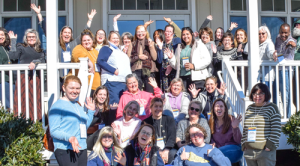
Province III is the Episcopal arm of the Jesus movement in the Mid-Atlantic. We seek to connect communities, provide a forum for the sharing of resources, and empower the people of the 1,287 churches and the twelve dioceses in our region.
-
-
- What We Do
-
-
These are several of the areas in which we unite in faith, love, and community to be stronger and do ministry better together.

-
-
-
- News